Types of maintenance
Keeping assets running efficiently goes beyond fixing what's broken. Discover the key maintenance strategies that reduce downtime, improve safety, and extend equipment life.
Types of Maintenance
1️⃣ Preventive Maintenance
Scheduled tasks (e.g., cleaning, inspections) to prevent failure.
Reliable assets, longer lifespan.
Risk of over-maintenance.
2️⃣ Corrective Maintenance
Fixing equipment after faults occur.
Simple for minor issues.
Downtime and potential safety risks.
3️⃣ Predictive Maintenance
Advanced tools and sensors predict issues.
Minimizes downtime, optimizes schedules.
Costly tech investment.
4️⃣ Condition-Based Maintenance
Maintenance triggered by real-time asset conditions.
Reduces unnecessary work.
Requires monitoring tools.
5️⃣ Emergency Maintenance
Urgent repairs after failures.
Essential for critical fixes.
High costs and safety risks.
Why It’s Crucial in Heavy Industries
In industries like manufacturing and oil and gas, maintenance ensures:
Operational Continuity: Avoids expensive downtime.
Compliance: Meets safety and regulatory standards.
Efficiency: Cuts costs and saves energy.
Modern Maintenance Trends
IoT & Sensors: Real-time equipment monitoring.
AI Systems: Predictive insights from data.
CMMS: Streamlined maintenance management.
The Bottom Line
Maintenance is more than just repairs—it’s a proactive strategy to maximize efficiency, safety, and longevity.
In a tech-driven world, modern practices like IoT and AI make maintenance smarter and more predictive, reducing costs and boosting reliability. Investing in robust maintenance isn’t just good practice—it’s a competitive edge.
❓ What type of maintenance has had the most impact in your organization?
Share your experiences in the comments!
What is Maintenance? A Comprehensive Guide
Maintenance is the backbone of operational efficiency, ensuring that everything—from industrial machinery to household appliances—stays functional, reliable, and long-lasting. Let’s dive into why maintenance matters and how it’s evolving in today’s tech-driven world.
🔥 Why is Maintenance Important?
The primary objective of maintenance is to keep assets performing at their best. Key benefits include:
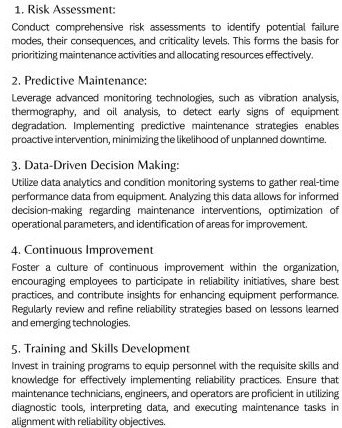
Maximizing Reliability: Reducing unexpected breakdowns.
Enhancing Safety: Ensuring systems operate within safe limits.
Extending Lifespan: Preventing premature wear and tear.
Optimizing Costs: Avoiding unplanned expenses with proactive care.
Types of Maintenance
Maintenance strategies vary to meet different needs:
1️⃣ Preventive Maintenance
Regular tasks (e.g., cleaning, inspections) to avoid failures.
Addresses potential issues before they escalate.
2️⃣ Corrective Maintenance.
Repairs after faults occur.
Restores equipment to operational status.
3️⃣ Predictive Maintenance.
Utilizes sensors and data to predict issues.
Proactive action through condition monitoring.
4️⃣ Condition-Based Maintenance.
Triggers based on actual asset conditions.
Avoids unnecessary tasks.
5️⃣ Emergency Maintenance.
Urgent fixes after unexpected breakdowns.
Typically costlier and riskier.
The Role of Maintenance in Heavy Industries.
In industries like mining, manufacturing, and oil & gas, maintenance is essential for:
Operational Continuity: Preventing downtime and supply chain disruptions.
Regulatory Compliance: Adhering to safety and environmental standards.
Cost Efficiency: Reducing energy usage and emergency repair expenses.
Modern Maintenance Practices
Tech advancements have revolutionized maintenance:
IoT Sensors: Real-time equipment monitoring.
AI Insights: Automated analysis for predictive actions.
CMMS Software: Streamlined scheduling, tracking, and reporting.
Challenges in Maintenance
Even with advancements, challenges remain:
Resource Allocation: Balancing time, labor, and finances.
Skill Gaps: Training for advanced systems.
Data Utilization: Managing and analyzing vast data for predictive maintenance.
Conclusion
Maintenance isn’t just about fixing things—it’s a strategic investment in efficiency, safety, and longevity.
In a world driven by technology, modern maintenance practices are smarter, more predictive, and cost-effective. For businesses, a robust maintenance program isn’t just an operational necessity—it’s a competitive edge.
💬 What’s your take on modern maintenance practices? Share your thoughts below! 👇

×
![]()
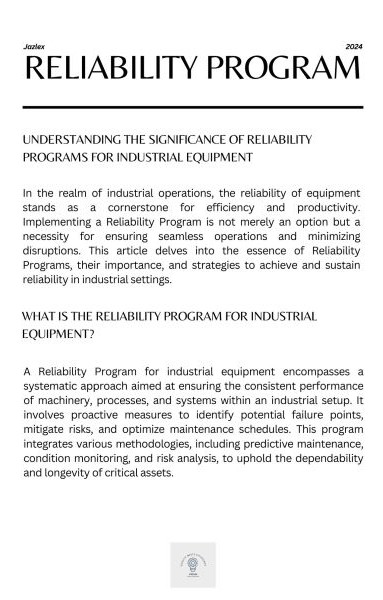
Reliability Program
Let's talk about the importance of Reliability Programs in industrial operations.
🛠️ Ensuring seamless performance and minimizing disruptions, these programs are not just a checklist item—they're a strategic imperative.
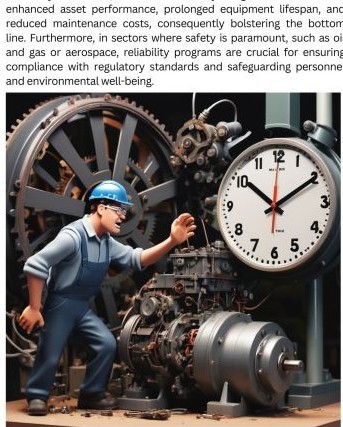
Reliability isn't a luxury; it's a must-have for any organization looking to optimize efficiency and safeguard productivity. Embrace reliability as a core principle and watch your operations thrive.